

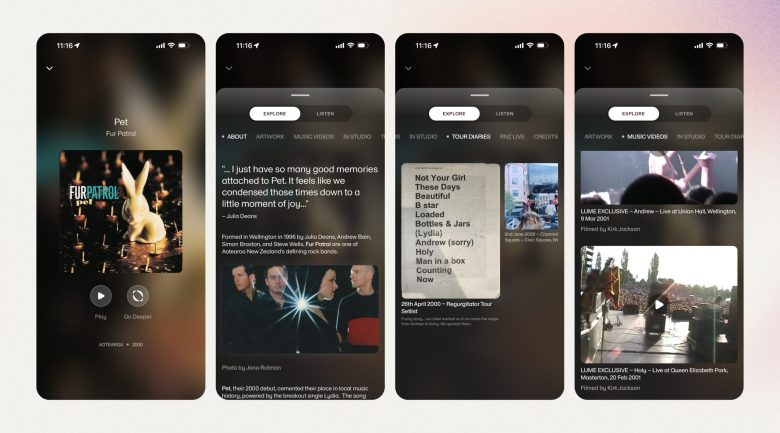
Last month we reported on the upcoming launch of Lume – a startup helping artists to sell albums to their core fans, including exclusive extra audio, video, imagery and text – after artist Lorde mentioned it in a post about her 49-demos drop.
An update: Lume is launching today (17 July) backed by seed investment from Lorde, Substack co-founder Hamish McKenzie and Letterboxd co-founder Karl von Randow among other investors.
As trailed, it is focused on albums, and specifically on selling albums, with musicians and rightsholders keeping 80% of the revenue from those sales. The startup is describing this as “digital box sets” due to the extra content included.
Lume’s app is launching globally, but its launch lineup of artists is deliberately local: all the artists hail from New Zealand, where the company is based. However, it will open up to artists elsewhere in the world in the coming months.
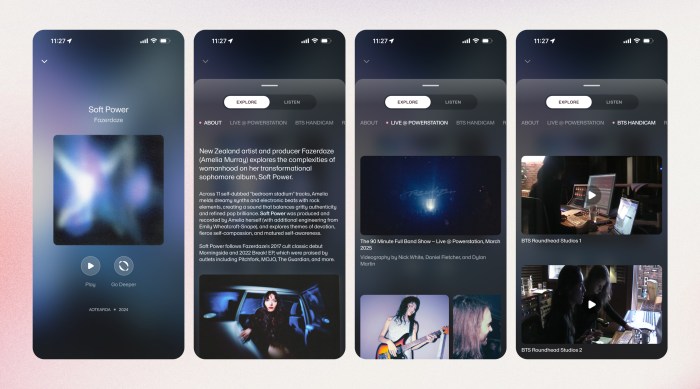
Fur Patrol, Fazerdaze, Die! Die! Die!, Tiki Taane, Vera Ellen, Womb, the Phoenix Foundation and Troy Kingi are among the artists at launch, with Lorde to follow later this year with a Lume (that’s the word the company is using to describe what it sells) of her 2025 album ‘Virgin’.
After our original piece, Lume co-founder Duncan Greive got in touch, so we asked him some suitably nosy questions to find out more.
What’s the origin story for Lume?
“It came from an observation, really, and a kind of cultural sadness. We noticed that streaming services were increasingly oriented towards social listening – playlists, radio, jams, AI DJs and so on – and that even people we considered to be huge music fans were now listening to songs much more than albums. Including us as founders.
Yet we were well aware that a large majority of artists, both established and emerging, would pick making a great album over any other legacy.
We were also watching the superfan conversation play out, and were somewhat mystified by it. It seemed to be about parts of the industry trying to market anything but music to audiences. So our idea seems comically simple: create a music product which combines the best of physical and digital media, built around albums.
It would function like a living box set – with demos, rarities, radio sessions, instrumentals – anything the artist wants in there, and able to be updated as album cycles progress. Purchased and owned, rather than another subscription product – because that aligns with how albums work (they’re more like novels than TV).
We also believed that a piece of technology doesn’t have to be misaligned with the financial interests of artists and other rights holders (partly inspired by Substack, whose Hamish McKenzie is a friend and investor). Hence 80% of net revenue going towards that group.
That is crucial to us – allow fans to buy from Lume knowing that the money goes where it should. We basically think that artists and serious music listeners think about the world the same way, and just lack for a product to crystalise that. And once the idea was in our heads, it wouldn’t leave.”
What kind of artists are you focusing on initially?
“We want Lume to be for an artist’s biggest fans. Those who are most interested in them and their craft, and who want to support them in a way which is much more meaningful than a stream can ever be. In return, they will get more than is available on streaming.
Much of which doesn’t fit there – voice notes, handwritten lyrics, essays, multiple demos or live takes of a single song.. All at the artist’s discretion.
Long way of saying it’s for the top tier of any artist’s audience. That said, while we want every album-oriented artist to be on Lume eventually, we think it’s emerging and (imperfect term) middle class artists who need it most.
Those who make amazing albums, and have passionate audiences, but struggle to get through the noise of social and streaming or find that touring is getting more and more costly.
Their fans can feel that pain, and want to do something with that feeling. Lume allows them to do that, while. giving them something fascinating and meaningful in return.
As far as genres go, we are very deliberately not targeting any specific genre. Our opening slate spans punk to pop, and we want it to be for all genres. In terms of territories, we live in New Zealand, and our first artists are entirely from Aotearoa.
But we are available globally from day one, and want artists from everywhere as fast as we can (we’re currently a small team and have to triage opportunity, but we want to be bigger as fast as we can).
We have live conversations with labels and managers in Australia, the US and the UK already, and we’re thrilled about that. As soon as we can scale to get people on the ground outside of the Anglosphere, we want to have conversations in other languages and music economies too.”
And labels can be involved in this too?
“Very much. While we are working hard to build a platform which allows artists to create their own Lumes (we view this as a format – you release your Lume on Lume), we recognise that labels, publishers, distributors, managers and other rightsholders all play vital roles in this business.
We love speaking to artists directly, and do so literally every day, but we also understand that their challenges also exist for labels, for managers, for publishers. We want to make a product which acknowledges everyone’s role and interest, and works for all of them. It will be complicated, we know!”
Lorde is an artist with a big following who’s newly independent. James Blake also. Is this a trend that plays into your thoughts?
“I think we’re at the start of a second (maybe third) wave for internet-era music. Streaming is established, everyone has it, on some level it’s a commodity. One we love and use every day. But the challenges it brings with it as the only solution for digital music are also very well mapped.
We aren’t trying to disrupt it – we think the vast majority of people who buy Lumes will maintain a streaming service too. We just think the current system is incomplete.
So the answer to your question is a huge yes. Everywhere I look I see artists trying to create their own lane, make something meaningful in a world of infinite content of indifferent quality. Whole generations of artists at different scales are assessing how they want to interact with institutions, from labels to platforms.
We think Lume fits squarely into this emerging world, with artists wanting more creative control and a closer connection to their audience. Over time, we want to have artist-to-audience communication within the app in time; until then we ask for email addresses so that artists and their partners can go direct to fan.
That’s not something we want to monetise, it’s something we think artists and labels should have always owned. “
What do you think the sweet spot for pricing of a Lume is?
“We think the old CD / LP price was pretty good. Something around $25 NZD / AUD, or €13 / £13 / $13USD. But we’re launching today and will find out quickly what the sweet spot is in terms of audience’s willingness to pay, while ensuring there is appropriate compensation for artists and their partners.”
What have you learned from other startups operating in the artists / superfans space?
“We’re big admirers of many of the startups you’re referring to. [untitled] is a gorgeous product with an amazing theory and team behind it. Even is clearly thriving and has found a huge audience. Nina Protocol was amazing. Bandcamp and SoundCloud flew the plane and continue to provide enormous value to artists and audiences.
There are so many doing cool stuff, with a real sense of mission. We just think the album has been neglected, collecting and curating is going to come back in a huge way, and that (some) people are overwhelmed by the infinite space of social and streaming, and want something private where they can stretch out and get weird and not feel like they’re competing for attention at all times.”
What’s your funding status, and are you looking for more investment?
“We raised a small friends and family round, thanks to the generosity and belief of people we knew well, who we trusted and who trusted us. We will be looking to raise more funding shortly (and welcome interest from potential investors).
We want to make sure that those who invest are fully aligned with our beliefs around the Lume – who take a long term view about who it’s for and where we should make money, and how tightly we want our interests to be aligned with artists and other rights holders.
None of that is negotiable. Aside from that, we’re keen to talk!”